


Magic Cat Piano: Music Tiles
4.783.00 Reviews
App Specs
- Version
- 2.5.0
- Updated On
- License
- Free
- Downloads
- 1,000,000+
- Developer
- Beatwave Studio
- Categories
- Music
- Platform
- Android
Screenshots


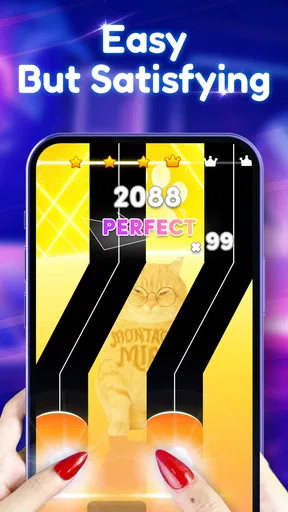
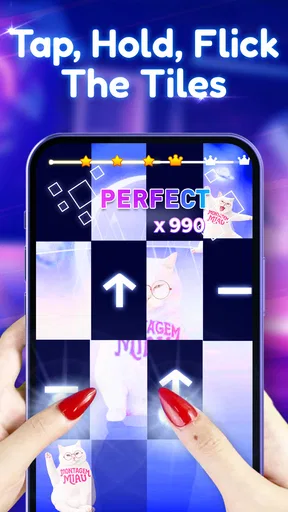




 Analysis by AppCompare
What makes this game interesting to me is the way it turns listening into a small physical task: I follow the notes with my fingers instead of letting the music sit in the background. That simple rhythm-game idea is a good fit for short breaks, especially if you like cute presentation as much as keeping a beat. Magic Cat Piano: Music Tiles is a free music game from Beatwave Studio, rated for Everyone, and its appeal is easy to understand: cats make the musical challenge feel light rather than intimidating.
A rhythm game built around attention
The central pleasure is concentrating on the moving tiles and trying to tap in time. I find that this changes how I listen: a melody becomes a sequence to track, and even a brief session asks me to pay attention rather than simply watch animations. The cat theme softens that focus. It gives the game a playful identity without changing the basic appeal of matching taps to music.
That makes the experience approachable, but it is not the same as learning piano. The game can help you notice timing and stay engaged with a tune, yet tapping tiles should not be mistaken for practicing hand position, reading notation, or building a musician’s technique. If your goal is a structured instrument lesson, a piano-learning app or a real keyboard is a better choice. If you want a quick musical challenge that feels more like play, this is a more natural fit.
How to make a short session work
I get the most out of a round when I give it my attention instead of treating it as background entertainment. A useful habit is to settle your phone comfortably, keep your fingers relaxed, and watch the incoming pattern rather than chasing each tile at the last moment. That small adjustment makes the tapping feel less frantic, particularly when a sequence starts to demand quicker reactions.
It also helps to treat missed taps as feedback, not as a reason to keep rushing. If I lose the rhythm, I pause mentally, listen for the beat, and return to the next clear cue. This is a simple game, but that approach makes it more satisfying: I’m working on timing and focus, not just trying to finish a song at any cost. For a quick reset between errands or tasks, one attentive attempt can be more enjoyable than a long, distracted session.
Where it fits in an ordinary day
Picture a quiet wait before a bus arrives: I can open the game, play for a little while, and put it away when it is time to move. The compact rhythm challenge suits that kind of pause better than a game that asks me to remember a long story or manage a complicated setup. The bright cats also make it an easy recommendation for someone who likes music games but finds competitive-looking interfaces off-putting.
For family use, the Everyone rating is reassuring as a broad age classification, though I would still consider whether a child enjoys quick reactions and repeated attempts. It is a tapping game, not a passive music player, so a child who prefers listening quietly may not stay interested. Likewise, anyone who needs a calm activity to wind down may find that tracking moving tiles keeps the mind more alert than they want.
Worth Reading Before You Choose

Baby Panda World Brings Quick Play to Modern Phones, but Its Game Library Feels Busy

ESPN’s Live Game View Makes Following Close Games Easier

QuizzLand Review: A Good Fit for Short Trivia Breaks, Not Every Player

Basketball Stars: Multiplayer Is Fast, but Can It Recover When Matches Go Wrong?

WEBTOON Turns Phone Updates Into a Better Reading Routine

Link to Windows Runs on Shared Habits, Not Social Feeds
What to expect from the challenge
The basic action is easy to grasp, but rhythm games depend on timing, and a song can feel harder when its tile pattern moves quickly. I would not judge my ability by one rough attempt: attention, screen position, and familiarity with a tune can all affect how comfortable a sequence feels. If I am getting frustrated, switching to a song or session that feels manageable is a better choice than repeatedly forcing a difficult run.
A practical trade-off is that this kind of play rewards focus more than musical knowledge. You do not need to arrive knowing piano, but you do need to watch closely and react. That makes it a decent choice for someone who wants a light test of coordination, while a slower music game or a listening app will suit people who would rather relax without a stream of visual prompts.
How it compares with other music apps
Compared with a piano tutorial, this puts immediate play ahead of instruction. Compared with a music-streaming app, it asks for active participation instead of letting a playlist run. And compared with rhythm games built around a more serious or competitive mood, its cat-led presentation makes the experience feel friendlier. Those distinctions matter more than any promise that one style is universally better: the right choice depends on whether you want to learn, listen, compete, or simply tap along.
One useful way to decide is to ask what you want from the next few minutes. Choose this game when you want a focused, playful interruption and a tune to follow. Choose a lesson app when you want guided practice, or a regular music player when you need sound without the demand to keep your eyes on the screen. That small distinction can prevent the common disappointment of expecting a casual game to deliver a full piano course.
First Impressions
From the moment you launch Magic Cat Piano: Music Tiles, you're greeted with vibrant colors and an irresistibly cute interface. The game doesn't waste time in grabbing your attention with its adorable cat characters and catchy tunes. It's like stepping into a whimsical world where your main task is to hit the right notes at the right time. The layout is intuitive, which makes navigating through the game a breeze, even for newcomers.
Gameplay and Features
Now, let's get into the meat of the game. The premise is simple: tap the tiles as they scroll down the screen in time with the music. It sounds easy, but as you progress, the speed and complexity ramp up, ensuring that you're continuously challenged. The game offers a wide range of songs, from classical to pop, so there's something for everyone.
One of the standout features is the variety of cat characters you can unlock. Each feline has its own unique style and animations, adding a layer of personalization to the game. The animations are smooth, and the cats' antics are bound to bring a smile to your face. Plus, who doesn't love unlocking new characters as they progress?
Music Selection
Music is the heart and soul of Magic Cat Piano: Music Tiles. The selection is vast and keeps expanding, which is fantastic for maintaining your interest over the long run. You'll find yourself playing everything from Beethoven to the latest pop hits. The sound quality is top-notch, making the experience even more immersive. Occasionally, I find myself humming along, completely absorbed in the melody.
There is a small practical choice here: sound can help you follow the pulse, while watching the tiles closely helps you anticipate the next tap. I would try both approaches in a quiet moment and keep the balance that feels comfortable. If you are somewhere noisy, relying on the visual rhythm may be easier; if the screen feels busy, listening carefully can help you settle into the tune. That flexibility is useful, but the game still needs your attention, so it is not ideal when you need to keep your eyes on something else.
Challenges and Progression
The game is designed to keep you on your toes. As you advance, the difficulty level increases, with faster tiles and more complex sequences. This progressive challenge ensures that the game remains engaging and doesn't become monotonous. There are also daily challenges and quests that reward you with bonuses and unlockables, which is a nice incentive to return to the game regularly.
For a new player, I would approach progression in small steps rather than treating every faster sequence as a test of skill. A familiar-feeling pace gives you room to notice how the tiles relate to the music; once that connection feels natural, more demanding runs become less overwhelming. The daily tasks can be a reason to return, but they are best treated as optional prompts. If a particular day is busy, skipping a session is preferable to turning a light game into another obligation.
User Experience
One of the things that really impressed me is how user-friendly the app is. The controls are responsive, and there's minimal lag, which is crucial for a rhythm-based game. The developers have done a great job in ensuring that the app runs smoothly across various devices. Plus, the occasional updates keep the app fresh and bug-free.
For the fairest feel, I play with the phone held steadily and avoid tapping while walking or carrying something. Rhythm play depends on consistent attention, so an unstable grip can make an otherwise manageable pattern seem harder. It is also worth taking a break if repeated attempts stop being fun; a short pause often makes it easier to hear the beat again. Those are ordinary habits, but they matter more here than they would in a game where timing is not the whole point.
Monetization
Of course, like many free apps, Magic Cat Piano: Music Tiles includes ads and in-app purchases. While the ads can be a bit intrusive at times, they are usually skippable, and you can opt for an ad-free experience through a one-time purchase. In-app purchases range from unlocking new songs to buying special cat characters, but they're not necessary to enjoy the game fully. It's nice to have options without feeling pressured to spend money.
The game is free to start, and I would first see whether its tapping style holds my interest before considering any optional spending. Unlocks may add variety for someone who already enjoys returning, but they do not change the basic question: do I like following tiles in time? A casual player can keep the experience simple, while someone drawn to collecting characters or trying more music may value those extras more. Since advertisements can interrupt the flow, it is sensible to choose a moment when a pause will not be annoying rather than opening a round during a task that demands uninterrupted focus.
Who is most likely to enjoy it
Beatwave Studio’s game has found a substantial audience, with over one million installs and an average rating of 4.8 from around 9,800 ratings. It is currently at version 2.5.0, and its release date was June 11, 2025. I would recommend it most readily to people who enjoy short, reactive games, like playful cat-themed presentation, and want music to be something they interact with rather than merely hear.
The strongest fit is a casual player who wants a low-pressure way to fill a pause, or a music fan curious about rhythm games but not looking for a serious competitive scene. The weaker fit is someone who wants deep musical instruction, uninterrupted listening, or a slow game that asks little of their eyes and hands. Knowing which of those you want is more useful than expecting the cats or song selection alone to make every session enjoyable.
A sensible way to decide
If you are unsure, try a brief session when you have a few quiet minutes and notice whether the tapping feels playful or stressful. Ask yourself whether you enjoy tracking visual cues, whether the music keeps you engaged, and whether the increasing pace makes you curious to improve. Those answers tell you more than the cute presentation by itself. For me, the best reason to keep it installed is that it can turn an otherwise empty wait into a focused little music break without asking for a big commitment.
Overall, Magic Cat Piano: Music Tiles is a delightful app that combines music, cats, and gaming in a wonderfully entertaining package. It's perfect for casual gamers and music lovers alike, providing a balance of challenge and fun. Whether you're waiting for the bus or just winding down after a long day, this app is sure to bring a smile to your face. Check it out, and let yourself be whisked away by the magic of music and cats!
Pros
- Engaging gameplay with intuitive controls.
- Wide variety of songs to choose from.
- Regular updates with new content.
- Visually appealing and colorful design.
- Offline play available for convenience.
Cons
- Contains ads that can interrupt gameplay.
- In-app purchases can be expensive.
- Limited song selection without premium.
- Occasional lag on older devices.
- Requires significant storage space.
FAQs for Magic Cat Piano: Music Tiles
What is Magic Cat Piano: Music Tiles?
Magic Cat Piano: Music Tiles is a captivating music rhythm game where players tap on piano tiles in sync with a variety of songs. Featuring an adorable cat theme, it combines engaging gameplay with a charming visual style. Perfect for music lovers, it offers a wide range of tracks across different genres.
Is Magic Cat Piano: Music Tiles free to play?
Yes, Magic Cat Piano: Music Tiles is free to download and play. However, it includes optional in-app purchases that allow players to unlock additional songs, remove ads, or access special features. While the core gameplay is accessible for free, these purchases enhance the overall experience.
What are the system requirements for Magic Cat Piano: Music Tiles?
Magic Cat Piano: Music Tiles requires iOS 10.0 or later for iPhone users and Android 5.0 or up for Android users. It is optimized for both smartphones and tablets, ensuring smooth gameplay. Make sure your device meets these requirements for the best experience.
Can I play Magic Cat Piano: Music Tiles offline?
Yes, Magic Cat Piano: Music Tiles offers offline play, allowing you to enjoy the game without an internet connection. However, certain features, such as downloading new songs or accessing online leaderboards, require an internet connection. This makes it ideal for playing on the go.
How challenging is Magic Cat Piano: Music Tiles?
Magic Cat Piano: Music Tiles offers various difficulty levels, catering to beginners and experienced players. The game starts with easier songs and gradually introduces more complex tracks as you progress. This makes it suitable for players of all skill levels, providing a rewarding challenge.


